Ctrl K
1795–1822
Johann Christoph Erhard (1795–1822) was a German painter and etcher of the Romantic era whose sensitive landscape studies and skillful prints earned him a growing reputation before his tragically early death at twenty-six. Born in Nuremberg, he studied at the Nuremberg Academy and later in Munich, where he was influenced by the Romantic landscape tradition and the revival of interest in the art of Albrecht Dürer.
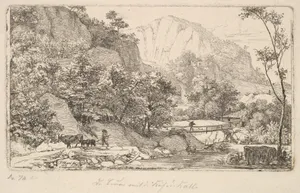
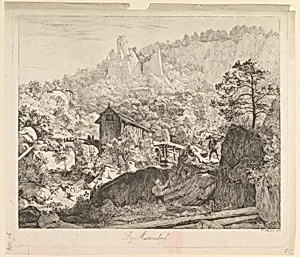
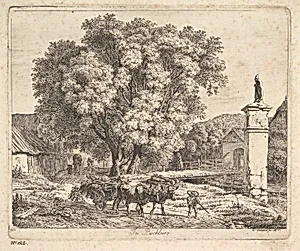
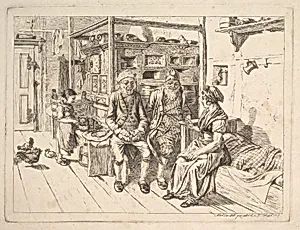
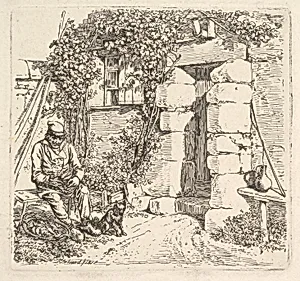
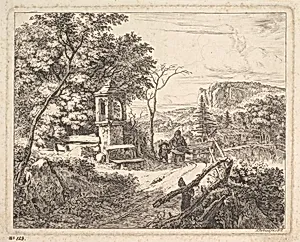
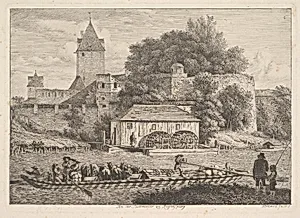
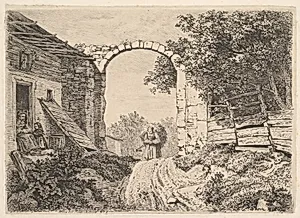
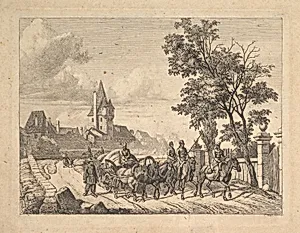
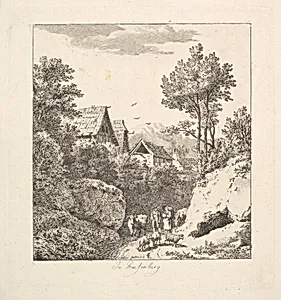
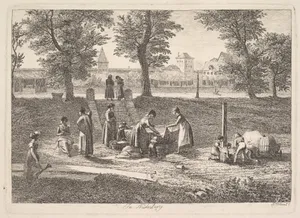
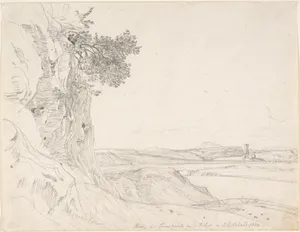
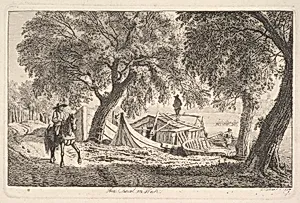
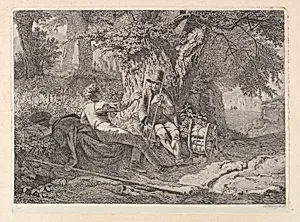
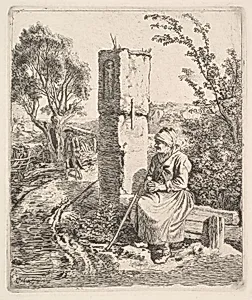
Erhard was particularly admired for his etchings and pencil drawings of mountain landscapes, Alpine views, and scenes of rural life in Bavaria and the Tyrol. His prints demonstrate a keen sensitivity to atmospheric effects, natural light, and the specific character of individual locations. He traveled to Austria and Italy, producing studies that combined precise topographic observation with a Romantic feeling for nature's grandeur.
His etchings are notable for their technical refinement and their ability to suggest atmospheric depth and luminous sky effects through subtle variations in line and tone. Erhard's graphic work shows the influence of both the Dutch seventeenth-century landscape etching tradition and the new Romantic sensibility for dramatic natural scenery.
Erhard's promising career was cut short when he took his own life in Rome in 1822, reportedly suffering from severe depression. Despite his brief career, he left a body of work that was recognized and collected by his contemporaries. His prints and drawings are held by the Germanisches Nationalmuseum in Nuremberg, the Albertina in Vienna, the British Museum, and the Metropolitan Museum of Art.
![On the High Fortress in Salzburg ("Auf der hohen Feste [Festung] in Salzburg")](https://images.artheonmuseum.org/met/dp/thumb/on-the-high-fortress-in-salzburg-auf-der-hohen-feste-festung-in-salzburg-368187.webp)