Ctrl K

1594–1665
Nicolas Poussin, born in June 1594 near Les Andelys in Normandy, emerged from a family of local distinction whose modest means and parental opposition could not deter his artistic calling. He received his initial training under the itinerant painter Quentin Varin in Rouen around 1611–12, absorbing lessons in storytelling, precise facial expressions, and rich colors, though without a formal long-term apprenticeship. Fleeing to Paris circa 1612 at age 18, Poussin briefly studied under Georges Lallemand and Ferdinand Elle while immersing himself in anatomy, perspective, and engravings after Raphael and Giulio Romano. Unsuccessful attempts to reach Italy in 1617–18 and 1622 honed his resolve; by spring 1624, he settled in Rome, where he copied antique sculptures and Renaissance masters like Raphael, befriended classicists such as Domenichino and Andrea Sacchi, and studied nudes at Domenichino's academy.
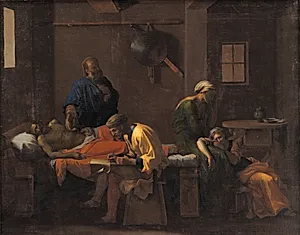
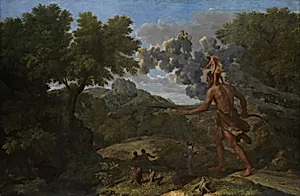
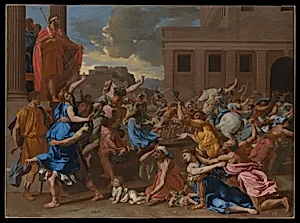
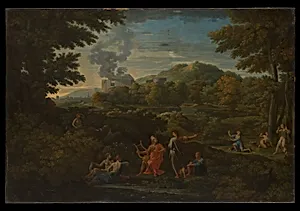
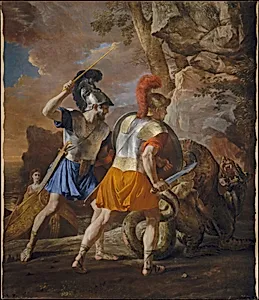
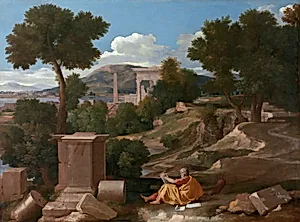
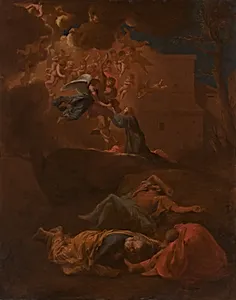
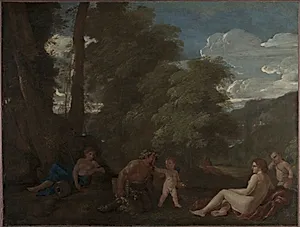
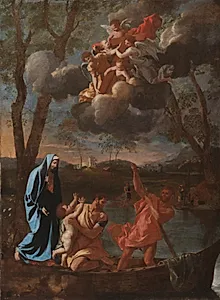
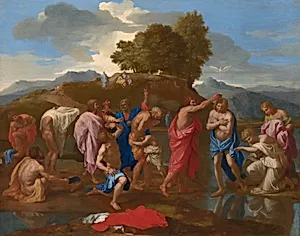
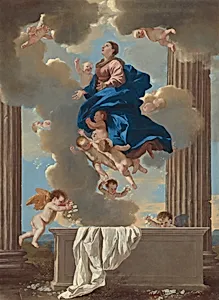
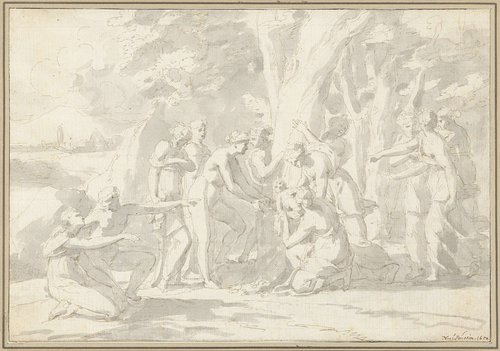
Poussin's style epitomized French Classicism within the Baroque era, prioritizing intellectual rigor, clarity, and harmonic order over emotional excess—favoring disegno (design) and precise line over vibrant color, with figures often arrayed in friezelike rows parallel to the picture plane. He worked in the classical tradition, drawing from antiquity and Raphael to create balanced compositions using wax figurines for planning. Summoned to Paris in 1640 as Premier Peintre du Roi under Louis XIII and Cardinal Richelieu, he returned to Rome by 1642, marrying Anne-Marie Dughet in 1630—whose brother Gaspard Dughet became a noted landscapist under the name Gaspard Poussin. Major works include *The Death of Germanicus* (1627–28), a stoic historical drama; *Et in Arcadia Ego* (c. 1630 and late 1630s), meditating on mortality; *A Dance to the Music of Time* (1639–40), allegorizing life's cycles; *The Rape of the Sabine Women* (c. 1633–37); *Blind Orion Searching for the Rising Sun* (1658); and the late *Four Seasons* (1660–64), blending pagan and Christian themes in luminous landscapes.
Poussin died in Rome on November 19, 1665, leaving a legacy as the founder of French Classical painting, whose "theory of the modes" and decorum influenced the Académie Royale and artists from Jacques-Louis David to Paul Cézanne and Pablo Picasso. His measured grandeur subordinated passion to formal beauty, making him the "Raphael of his century" and a perennial touchstone for rational order in art.