
Bowl
Unknown Artist
13th century or later
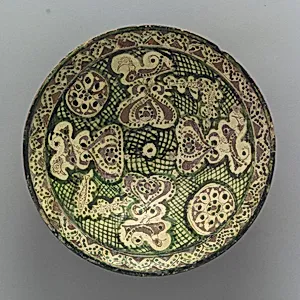
Medium
Earthenware; painted and glazed
Dimensions
H. 11 1/8 in. (28.3 cm) W. 3 7/16 in. (8.7 cm)
Classification
Ceramics
Department
Islamic Art
Museum
Metropolitan Museum of Art, New York, NY
Credit
Museum Accession
Accession Number
x.395
Rights
Public Domain
Tags
Art Historical Context
This elegant earthenware bowl, dating to the 13th or later, hails from the rich tradition of Islamic ceramics showcased in the Metropolitan Museum of Art's Islamic Art department. Standing at an impressive height of 11 1/8 inches (28.3 cm) with a narrow width of 37/16 inches (8.7 cm), its form suggests it may have both practical and decorative purposes, perhaps for holding perfumes, spices, or as a table centerpiece. Adorned with vibrant floral motifs—painted and then glazed for a luminous finish—the bowl exemplifies the exquisite craftsmanship of anonymous artisans who transformed everyday objects into art. In the Islamic world, ceramics like this flourished from the medieval period onward, with potters mastering low-fired earthenware techniques that allowed for bold colors and intricate designs under a glossy glaze. Floral patterns, evoking gardens of paradise central to Islamic symbolism, were a hallmark of this era, appearing across regions from Persia to Spain. The glazing process not only protected the surface but enhanced its sheen, making such vessels prized for both utility and beauty in homes and mosques. Though the artist remains unknown, this bowl captures the cultural vibrancy of Islamic art, where functionality met poetic expression. A testament to enduring technical innovation, it invites us to appreciate the delicate balance of form, color, and motif in everyday splendor. (218 words)