
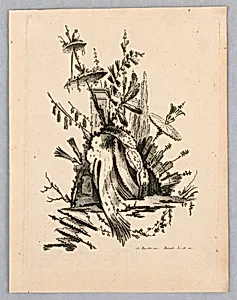
Chinoiserie Vignette
mid- 18th–late 18th century
Classification
Department
Smithsonian Collection
Museum
Smithsonian American Art Museum
Credit
Gift of Eleanor and Sarah Hewitt
Accession Number
1931-94-690
Rights
Public Domain
About this artwork
Research in Progress
Art Historical Context
**Chinoiserieette** by French artist Peyrotte (169–1769) captures enchanting whimsy of th-century European fascination with East. Created in the mid-to-late1700s, this print Peyrotte's specialty in decorative designs, often used for furnishings, wallpapers, and porcelain. As a master of ornamental vignettes—small, intricate scenes—Peyrotte blended French Rococo elegance with imagined Chinese motifs, reflecting the era's "chinoiserie" craze, where exoticism symbolized luxury and sophistication. Chinoiserie emerged in the Rococo period as Europe's playful reinterpretation of Asian aesthetics, fueled by expanding trade routes like the Silk Road and maritime voyages. Peyrotte's work, likely intended for interior decoration, showcases delicate pagodas, florals, and figures in a stylized, asymmetrical composition typical of the style. Though the exact medium remains under research, its classification as a print highlights techniques like etching or engraving, which allowed widespread dissemination of these fanciful patterns to aristocratic homes across Europe. Today, this vignette graces the Smithsonian American Art Museum's collection, gifted by Eleanor and Sarah Hewitt. It invites visitors to ponder how 18th-century artists like Peyrotte bridged cultures, turning distant dreams into tangible art that adorned the salons of Versailles and beyond. (198 words)