
Hexagonal Tile
Unknown Artist
first half 15th century
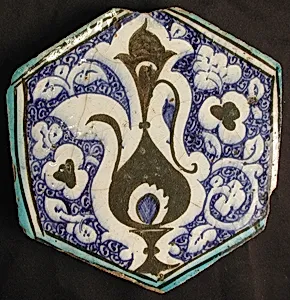
Medium
Composite body; underglaze painted
Dimensions
H. 7 1/8 in. (18.1 cm) W. 6 3/4 in. (17.1 cm) D. 13/16 in. (2 cm)
Classification
Ceramics-Tiles
Department
Islamic Art
Museum
Metropolitan Museum of Art, New York, NY
Credit
Museum Accession
Accession Number
x.228.1
Rights
Public Domain
Tags
Art Historical Context
This exquisite hexagonal tile, crafted in the first half of the 15 century, exemplifies the refined ceramic artistry of the Islamic world. Measuring about 7 inches tall and wide, it features a composite body—likely a stonepaste or fritware mixture prized for its durability and ability to hold vibrant colors—decorated with underglaze. This technique involved applying pigments directly onto the unfired clay body before glazing and firing, ensuring the designs bonded permanently with the surface for a luminous, long-lasting effect. Produced during a golden age of Islamic tilework, possibly in regions like Iran or the eastern Mediterranean under Timurid influence, such tiles adorned architectural wonders like mosques, palaces, and madrasas. Their hexagonal shape allowed artisans to tessellate them into intricate geometric patterns, creating hypnotic walls that symbolized paradise gardens in Islamic cosmology. The tag "Ewers" hints at motifs of vessels, common in these designs to evoke abundance and ritual purity. Though the artist remains unknown, this tile's precision reflects masterful craftsmanship, blending functionality with spiritual beauty. On view in the Metropolitan Museum of Art's Islamic Art department, it invites visitors to marvel at how everyday ceramics elevated sacred spaces centuries ago.