
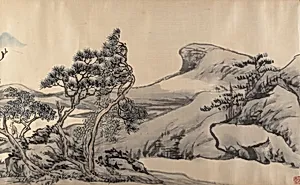
清 張賜寧 設色山水 卷|Landscape
1807
Medium
Handscroll; ink and color on silk
Dimensions
16 1/4 x 107 7/8 in. (41.3 x 274 cm)
Classification
Paintings
Culture & Period
China · Qing dynasty (1644–1911)
Department
Asian Art
Museum
Metropolitan Museum of Art, New York, NY
Credit
Rogers Fund, 1957
Accession Number
57.100
Rights
Public Domain
Tags
Art Historical Context
Created in 1807 during the Qing dynasty (1644–1911), this handscroll landscape by Zhang Cining exemplifies the enduring tradition of Chinese shanshui (mountains and water) painting. Titled *Set Color Landscape Scroll*, it measures an impressive 16¼ x 107⅞ inches (41.3 x 274 cm) and is rendered in ink and vibrant colors on silk—a luxurious medium that allowed for luminous effects and subtle gradations. Acquired by the Metropolitan Museum of Art through the Rogers Fund in 1957, it resides in the Asian Art department. Qing artists like Zhang Cining built on centuries-old literati ideals, portraying nature not just as scenery but as a realm of spiritual harmony and poetic retreat. The use of "set color" (shese) technique infuses the hills, trees, and winding paths with delicate hues, blending precise brushwork with atmospheric depth to evoke mist-shrouded mountains and serene valleys. Handscrolls were designed for intimate, private viewing: unrolled slowly section by section, they unfold a meditative journey, inviting contemplation much like a walk through the depicted terrain. This work captures the Qing era's reverence for classical landscape formulas while showcasing silk's tactile elegance, making it a window into imperial China's cultural sophistication. Visitors can imagine scholar-officials savoring such scrolls in secluded studios, finding solace amid turbulent times.