
Panel
Qing dynasty (1644–1911), 1875/1900
Medium
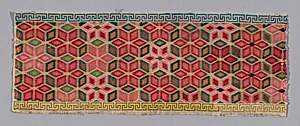
Forty-four pairs and eight odd pieces of embroidered sleeve, ankle bands, etc. on gauze.
Dimensions
12.7 × 33.8 cm (5 × 13 3/8 in.)
Classification
embroidery
Department
Textiles
Museum
Art Institute of Chicago
Accession Number
156161
Rights
Public Domain
Art Historical Context
This exquisite *Panel* from the late Qing dynasty (1875/1900), crafted by Han Chinese, showcases the pinnacle of imperial China's textile artistry. Measuring a modest 12.7 × 33.8 cm, it is a delicate composition of forty-four pairs and eight individual pieces of embroidered sleeve bands ankle bands, and similar garment fragments, meticulously mounted on translucent gauze. Housed in the Art Institute of Chicago's Department, it exemplifies the era's fusion of functionality and opulence during the Qing period (1644–1911), the last imperial dynasty when Manchu rulers embraced Han traditions in crafts. The embroidery techniques reveal masterful precision, likely employing satin stitch, Peking knot, or other specialized methods typical of elite workshops. These bands, originally adorning robes or ceremonial attire, highlight the cultural role of textiles as symbols of status and refinement. Han Chinese embroiderers were renowned for their intricate motifs—often floral, auspicious symbols, or narrative scenes—rendered in silk threads on fine gauze, which allowed light to play through the fabric, enhancing its ethereal quality. As a preserved relic of late 19th-century fashion, this panel offers a window into Qing domestic life and artisanal legacy, just before China's turbulent transition to the 20th century. Visitors will appreciate its tactile intimacy, a testament to the enduring beauty of Chinese embroidery.
About the Artist
Han-Chinese
**Han-Chinese** was the collective attribution given to anonymous artisans of Han Chinese descent who crafted intricate embroidered textiles during the Qing dynasty (1644–1911). These makers, active primarily in the late 18th to early 20th centuries, specialized in luxurious garments and furnishings that showcased the pinnacle of Han Chinese needlework traditions. Their early lives and individual ...