
Rhea Silvia
1501 to 1550
Classification
Department
CG-E
Museum
National Gallery of Art, Washington, D.C.
Credit
Rosenwald Collection
Accession Number
1943.3.244
Rights
Public Domain
Art Historical Context
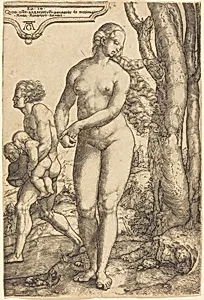
Behold *Rhea Silvia*, a captivating engraving by Heinrich Aldegrever, one of the renowned "Little Masters" of the Renaissance. Created between 1501 and 1550, this print draws from Roman mythology, depictinghea Silvia, the Vest Virgin destined to become the mother of Romulus and Remus, Rome's legendary founders. Aldegre, a German artist from Soest active in the th century, masterfully rendered such classical tales in intricate detail, blending humanist learning with the meticulous line work of engraving. As a print from the Rosenwald Collection at the National Gallery of Art, *Rhea Silvia* exemplifies the era's revolutionary printmaking techniques. Northern Renaissance engravers like Aldegrever, influenced by Albrecht Dürer, produced affordable multiples that democratized art, spreading mythological and moral narratives across Europe. The unknown medium likely involves fine copperplate engraving, allowing for delicate textures and expressive figures that captured the imagination of collectors and scholars. This work highlights the Renaissance revival of antiquity, where pagan myths intertwined with Christian humanism. Aldegrever's precise style invites viewers to ponder fate, divinity, and heroism—timeless themes etched into history. (198 words)
About the Artist
Heinrich Aldegrever · 1502–1561
Heinrich Aldegrever, born in 1502 in Paderborn, Westphalia, to parents Herman and Katherine Trippenmeker—a family of clog-makers known by the dialect name Trippenmecker—emerged as a multifaceted artist in the German Renaissance. His early training remains undocumented, though he likely apprenticed in a Soest goldsmith's workshop after relocating there around 1525, where he joined the painters' gui...