
Ancient Egyptian Art
Ancient Egyptian art spans over three millennia, representing one of humanity's longest continuous artistic traditions. From the pyramids of Giza to the treasures of Tutankhamun's tomb, Egyptian artists created works of extraordinary beauty and symbolic power that served religious, funerary, and political purposes.
Historical Context
Egyptian civilization developed along the Nile River, creating a remarkably stable culture that persisted through the Old, Middle, and New Kingdoms until Cleopatra's death in 30 BCE. Art was intimately connected to religion and the afterlife, with strict conventions governing representation that changed little over three thousand years.
Key Characteristics
- Hierarchical scale showing social importance through size
- Composite perspective combining frontal and profile views
- Rich symbolism in colors, animals, and hieroglyphics
- Monumental scale in architecture and sculpture
- Focus on eternal preservation through mummification and tomb art
Explore Ancient Egypt Artworks
10,000 artworks from 3000 BCE - 30 BCE available in our collection
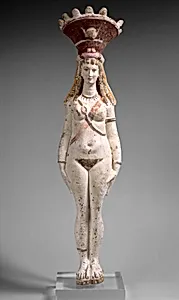
Figure of Isis-Aphrodite
Unknown Artist
2nd century A.D.
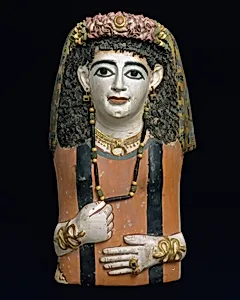
Mummy Mask
Unknown Artist
A.D. 60–70
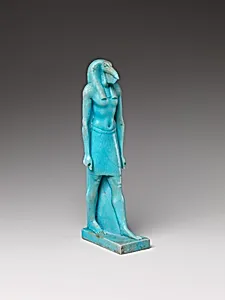
Striding Thoth
Unknown Artist
332–30 B.C.
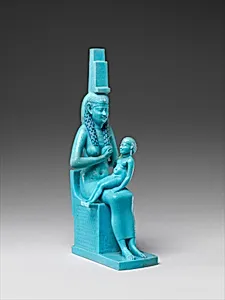
The Goddess Isis and her Son Horus
Unknown Artist
332–30 B.C.
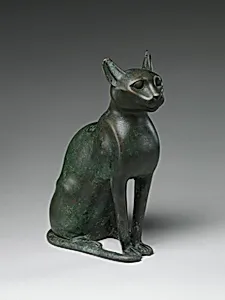
Cat Statuette intended to contain a mummified cat
Unknown Artist
332–30 B.C.
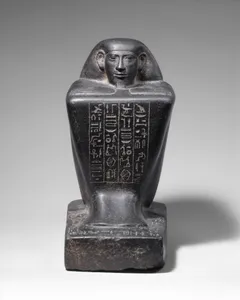
Block Statue of a Prophet of Montu and Scribe Djedkhonsuefankh, son of Khonsumes and Taat
Unknown Artist
690–610 B.C.
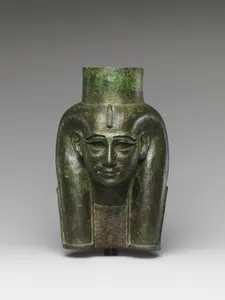
Head of a goddess, probably Mut, for attachment to a processional barque (?)
Unknown Artist
ca. 700 B.C.
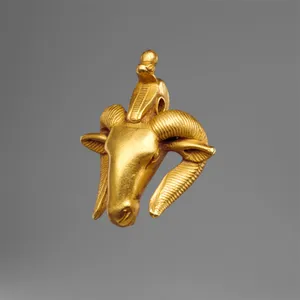
Ram's-head Amulet
Unknown Artist
ca. 712–664 B.C.
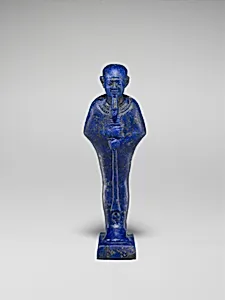
Cult Image of the God Ptah
Unknown Artist
ca. 945–600 B.C.
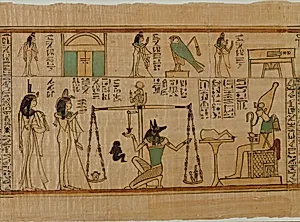
Book of the Dead for the Chantress of Amun Nauny
Unknown Artist
ca. 1050 B.C.
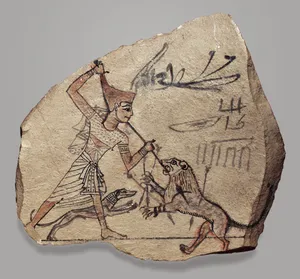
Artist's Sketch of Pharaoh Spearing a Lion
Unknown Artist
ca. 1186–1070 B.C.
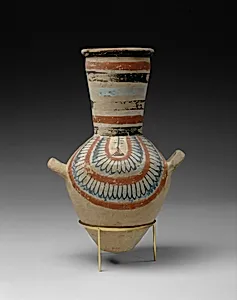
Jar from the tomb of Sennedjem
Unknown Artist
ca. 1279–1213 B.C.
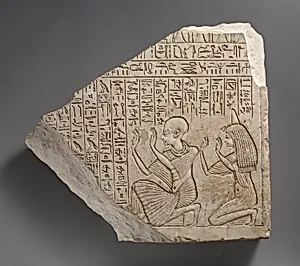
Votive stela of Userhat
Unknown Artist
1327–1295 BC
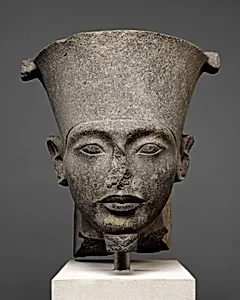
Head of the god Amun
Unknown Artist
ca. 1336–1327 B.C.
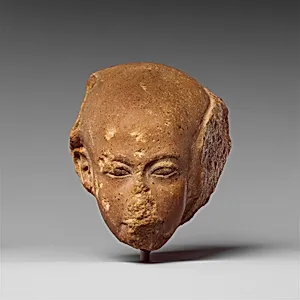
Head of a princess from a group statue
Unknown Artist
ca. 1352–1336 B.C.
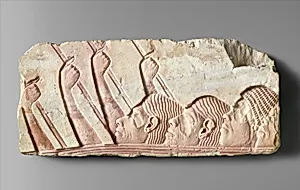
Attendants in a Procession
Unknown Artist
ca. 1353–1336 B.C.
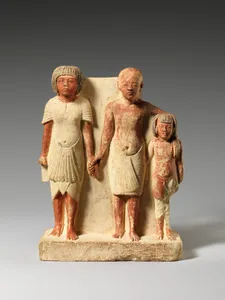
Statue of two men and a boy that served as a domestic icon
Unknown Artist
ca. 1353–1336 B.C.
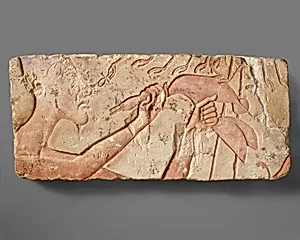
Akhenaten Sacrificing a Duck
Unknown Artist
ca. 1353–1336 B.C.
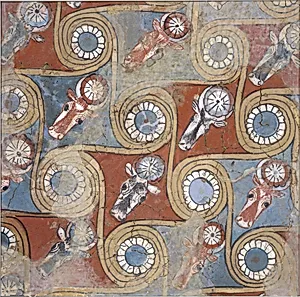
Ceiling painting from the palace of Amenhotep III
Unknown Artist
ca. 1390–1352 B.C.
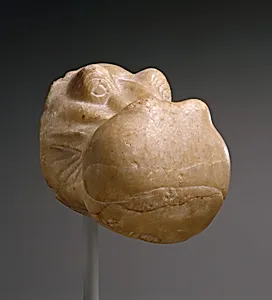
Head of a Hippopotamus
Unknown Artist
ca. 1390–1352 B.C.
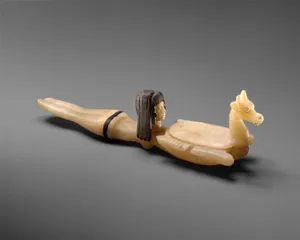
Cosmetic Spoon in the Shape of Swimming Woman Holding a Dish
Unknown Artist
ca. 1390–1352 B.C.
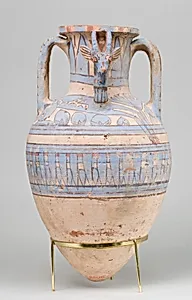
Blue-Painted Ibex Amphora from Malqata
Unknown Artist
ca. 1390–1352 B.C.
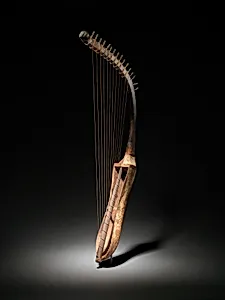
Arched Harp (shoulder harp)
Unknown Artist
ca. 1390–1295 B.C.
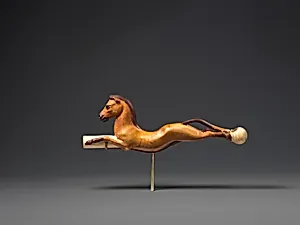
Whip Handle in the Shape of a Horse
Unknown Artist
ca. 1390–1352 B.C.
Explore Other Periods
Greek & Roman
800 BCE - 476 CE
Classical antiquity produced the artistic ideals that shaped Western civilization. Greek artists pioneered naturalistic human representation, while Romans excelled in portraiture, engineering, and monumental architecture. Together, they established standards of beauty, proportion, and artistic excellence that artists would return to for millennia.
Medieval
500-1400
Medieval art encompasses nearly a thousand years of artistic production, from the fall of Rome to the dawn of the Renaissance. This period saw the development of Byzantine mosaics, Romanesque monasteries, Gothic cathedrals, and illuminated manuscripts—all serving primarily religious purposes with a focus on spiritual rather than naturalistic representation.
19th Century
1800-1899
The 19th century witnessed revolutionary transformations in art, from Neoclassicism through Romanticism, Realism, Impressionism, and Post-Impressionism. This era saw artists breaking from academic traditions, exploring new techniques, and capturing modern life with unprecedented immediacy.