
Ancient Greek & Roman Art
Classical antiquity produced the artistic ideals that shaped Western civilization. Greek artists pioneered naturalistic human representation, while Romans excelled in portraiture, engineering, and monumental architecture. Together, they established standards of beauty, proportion, and artistic excellence that artists would return to for millennia.
Historical Context
Greek city-states, particularly Athens, developed democracy, philosophy, and unprecedented artistic achievement. Rome conquered the Mediterranean world, absorbing and spreading Greek culture while adding their own innovations in portraiture, engineering, and imperial propaganda.
Key Characteristics
- Idealized human form based on mathematical proportion
- Contrapposto pose creating naturalistic movement
- Development from Archaic stylization to Classical naturalism
- Roman veristic portraiture capturing individual character
- Architectural innovations including columns, arches, and domes
Related Art Movements
Explore Greek & Roman Artworks
10,000 artworks from 800 BCE - 476 CE available in our collection
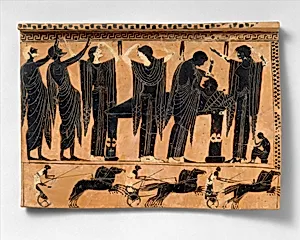
Terracotta funerary plaque
Unknown Artist
ca. 520–510 BCE
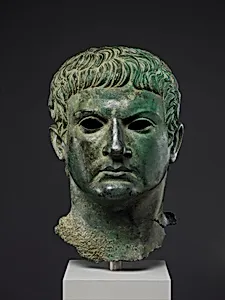
Bronze portrait of a man
Unknown Artist
1st half of 1st century CE
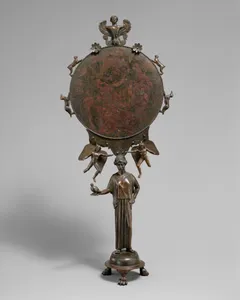
Bronze mirror with a support in the form of a draped woman
Unknown Artist
mid-5th century BCE
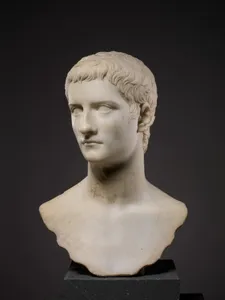
Marble portrait bust of the emperor Gaius, known as Caligula
Unknown Artist
37–41 CE
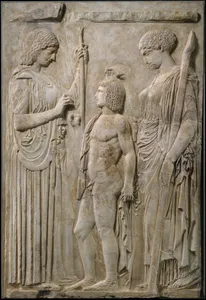
Ten marble fragments of the Great Eleusinian Relief
Unknown Artist
ca. 27 BCE–14 CE
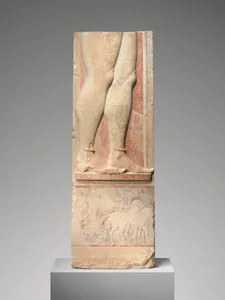
Fragment of the marble stele (grave marker) of a hoplite (foot soldier)
Unknown Artist
ca. 525–515 BCE
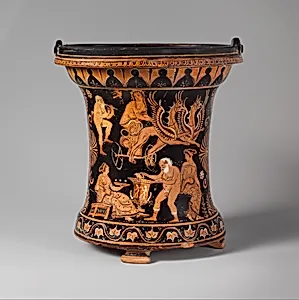
Terracotta situla (bucket)
Lycurgus Painter
ca. 360–340 BCE
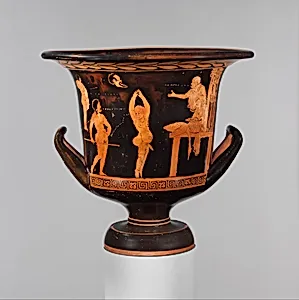
Terracotta calyx-krater (mixing bowl)
Dolon Painter
ca. 400–390 BCE
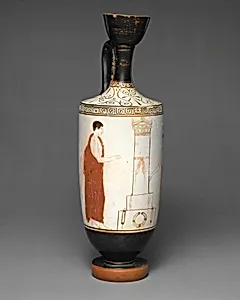
Terracotta lekythos (oil flask)
Achilles Painter
ca. 440 BCE
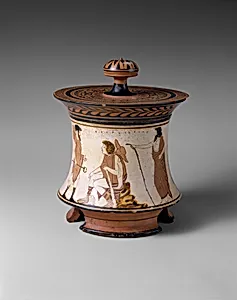
Terracotta pyxis (box)
Penthesilea Painter
ca. 465–460 BCE
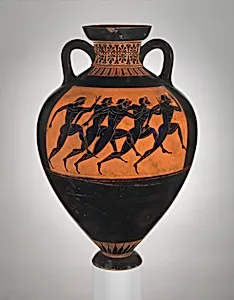
Terracotta Panathenaic prize amphora
Euphiletos Painter
ca. 530 BCE
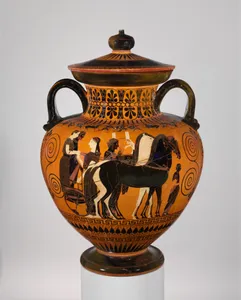
Terracotta neck-amphora (jar) with lid and knob (27.16)
Exekias
ca. 540 BCE

Terracotta lekythos (oil flask)
Amasis Painter
ca. 550–530 BCE
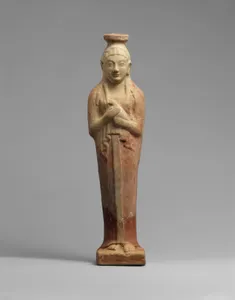
Terracotta alabastron (perfume vase) in the form of a woman holding a dove
Unknown Artist
mid-6th century BCE
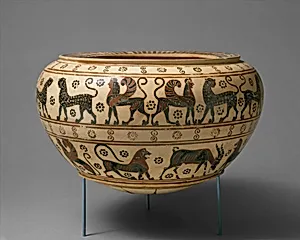
Terracotta dinos (mixing bowl)
Polyteleia Painter
ca. 630–615 BCE
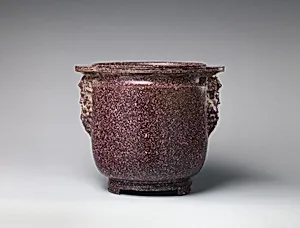
Porphyry vessel with bearded masks
Unknown Artist
ca. late 1st century BCE‒early 2nd century CE
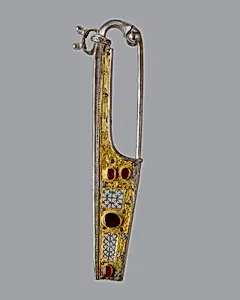
Wing Brooch
Unknown Artist
100–200
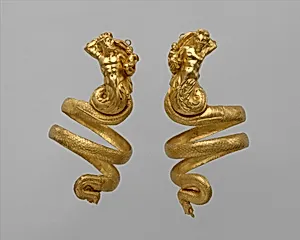
Pair of gold armbands
Unknown Artist
ca. 200 BCE
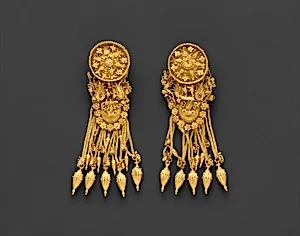
Gold earrings with disk and boat-shaped pendant
Unknown Artist
ca. 300 BCE
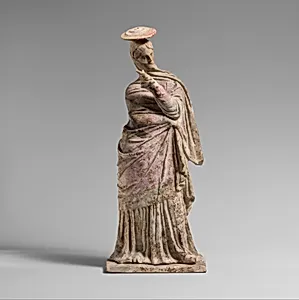
Terracotta statuette of a woman
Unknown Artist
2nd century BCE
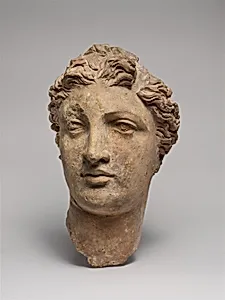
Terracotta head of a woman
Unknown Artist
3rd–2nd century BCE
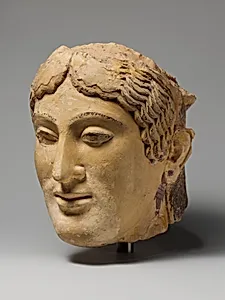
Terracotta head of a woman, probably a sphinx
Unknown Artist
1st quarter of the 5th century BCE
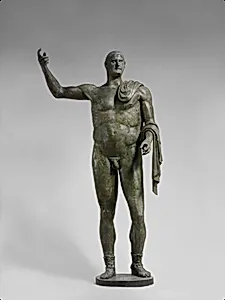
Bronze statue of the emperor Trebonianus Gallus
Unknown Artist
251–253 CE
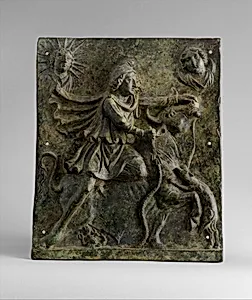
Bronze plaque of Mithras slaying the bull
Unknown Artist
mid-2nd–early 3rd century CE
Explore Other Periods
Ancient Egypt
3000 BCE - 30 BCE
Ancient Egyptian art spans over three millennia, representing one of humanity's longest continuous artistic traditions. From the pyramids of Giza to the treasures of Tutankhamun's tomb, Egyptian artists created works of extraordinary beauty and symbolic power that served religious, funerary, and political purposes.
Medieval
500-1400
Medieval art encompasses nearly a thousand years of artistic production, from the fall of Rome to the dawn of the Renaissance. This period saw the development of Byzantine mosaics, Romanesque monasteries, Gothic cathedrals, and illuminated manuscripts—all serving primarily religious purposes with a focus on spiritual rather than naturalistic representation.
19th Century
1800-1899
The 19th century witnessed revolutionary transformations in art, from Neoclassicism through Romanticism, Realism, Impressionism, and Post-Impressionism. This era saw artists breaking from academic traditions, exploring new techniques, and capturing modern life with unprecedented immediacy.