
19th Century Art
The 19th century witnessed revolutionary transformations in art, from Neoclassicism through Romanticism, Realism, Impressionism, and Post-Impressionism. This era saw artists breaking from academic traditions, exploring new techniques, and capturing modern life with unprecedented immediacy.
Historical Context
The 19th century was marked by industrialization, urbanization, political revolutions, and the rise of photography. These changes profoundly influenced artistic movements, as artists responded to modernity, questioned academic conventions, and sought new ways to represent reality and emotion.
Key Characteristics
- Shift from academic traditions to modern approaches
- Emphasis on light, color, and atmospheric effects
- Focus on contemporary life and ordinary subjects
- Exploration of emotional expression and subjective experience
- Development of plein-air painting and new techniques
Notable Artists
Related Art Movements
Explore 19th Century Artworks
10,000 artworks from 1800-1899 available in our collection
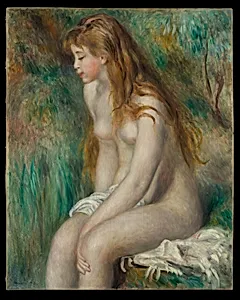
Young Girl Bathing
Auguste Renoir
1892

Ia Orana Maria (Hail Mary)
Paul Gauguin
1891
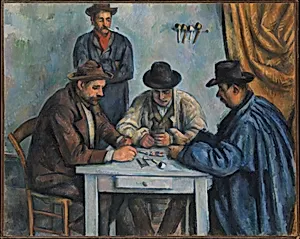
The Card Players
Paul Cézanne
1890–92
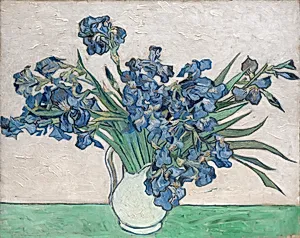
Irises
Vincent van Gogh
1890
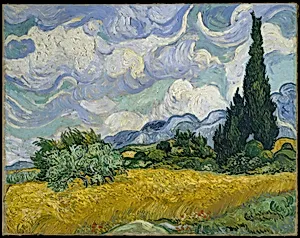
Wheat Field with Cypresses
Vincent van Gogh
June 1889
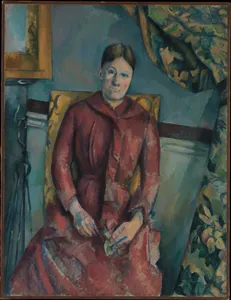
Madame Cézanne (Hortense Fiquet, 1850–1922) in a Red Dress
Paul Cézanne
1888–90
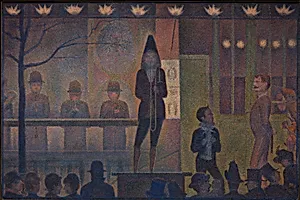
Circus Sideshow (Parade de cirque)
Georges Seurat
1887–88

Self-Portrait with a Straw Hat (obverse: The Potato Peeler)
Vincent van Gogh
1887
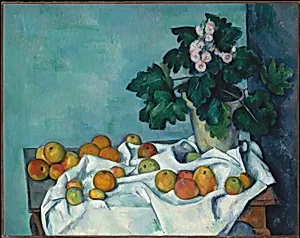
Still Life with Apples and a Pot of Primroses
Paul Cézanne
ca. 1890
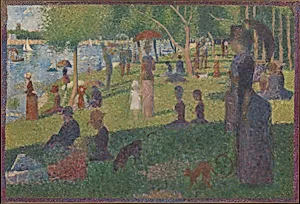
Study for "A Sunday on La Grande Jatte"
Georges Seurat
1884
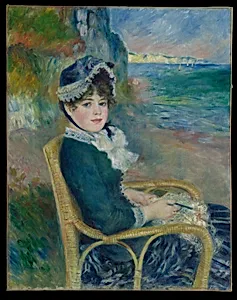
By the Seashore
Auguste Renoir
1883
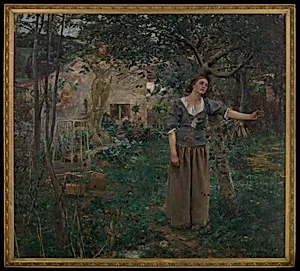
Joan of Arc
Jules Bastien-Lepage
1879
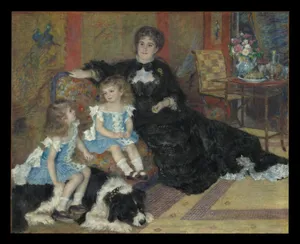
Madame Georges Charpentier (Marguérite-Louise Lemonnier, 1848–1904) and Her Children, Georgette-Berthe (1872–1945) and Paul-Émile-Charles (1875–1895)
Auguste Renoir
1878
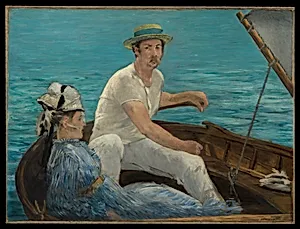
Boating
Edouard Manet
1874
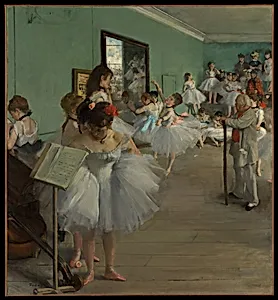
The Dance Class
Edgar Degas
1874
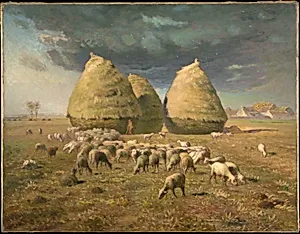
Haystacks: Autumn
Jean-François Millet
ca. 1874
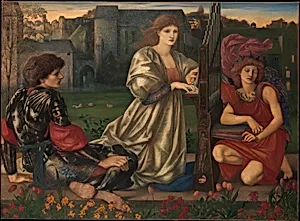
The Love Song
Sir Edward Burne-Jones
1868–77
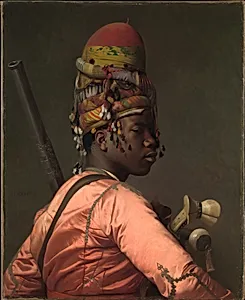
Bashi-Bazouk
Jean-Léon Gérôme
1868–69
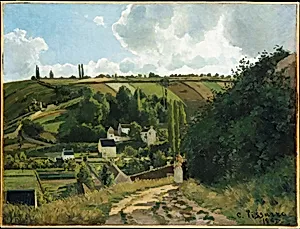
Jalais Hill, Pontoise
Camille Pissarro
1867
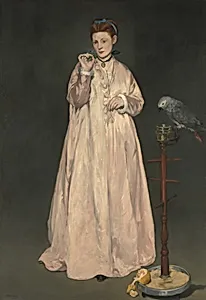
Young Lady in 1866
Edouard Manet
1866
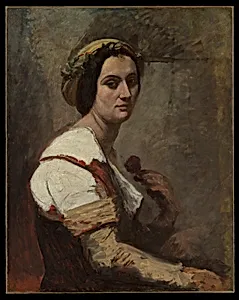
Sibylle
Camille Corot
ca. 1870
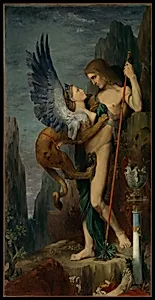
Oedipus and the Sphinx
Gustave Moreau
1864
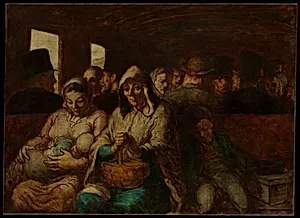
The Third-Class Carriage
Honoré Daumier
ca. 1862–64
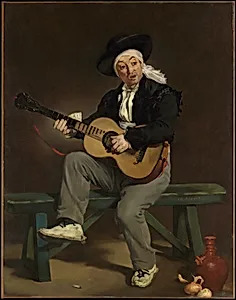
The Spanish Singer
Edouard Manet
1860
Explore Other Periods
Ancient Egypt
3000 BCE - 30 BCE
Ancient Egyptian art spans over three millennia, representing one of humanity's longest continuous artistic traditions. From the pyramids of Giza to the treasures of Tutankhamun's tomb, Egyptian artists created works of extraordinary beauty and symbolic power that served religious, funerary, and political purposes.
Greek & Roman
800 BCE - 476 CE
Classical antiquity produced the artistic ideals that shaped Western civilization. Greek artists pioneered naturalistic human representation, while Romans excelled in portraiture, engineering, and monumental architecture. Together, they established standards of beauty, proportion, and artistic excellence that artists would return to for millennia.
Medieval
500-1400
Medieval art encompasses nearly a thousand years of artistic production, from the fall of Rome to the dawn of the Renaissance. This period saw the development of Byzantine mosaics, Romanesque monasteries, Gothic cathedrals, and illuminated manuscripts—all serving primarily religious purposes with a focus on spiritual rather than naturalistic representation.