Ctrl K
1523–1567
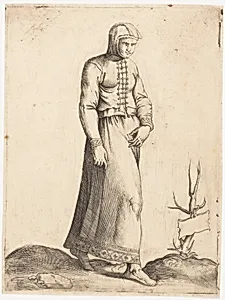
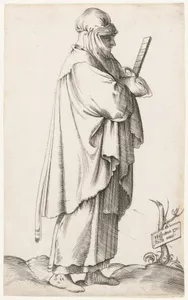
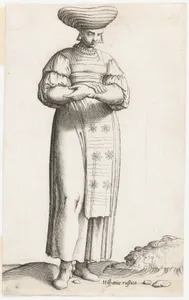
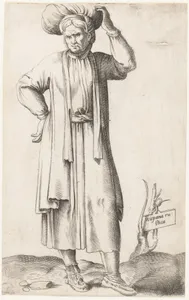
Enea Vico (1523–1567) was born in Parma and came of age during the final, energetic decades of Italian Renaissance printmaking. By 1541 he had made his way to Rome, where he entered the orbit of the engraver and publisher Tommaso Barlacchi and began his professional career. In Rome, Vico encountered the work of the most celebrated printmakers of the preceding generation—Marcantonio Raimondi, Agostino Veneziano, and Antonio Salamanca—whose techniques of translating painted and sculptural compositions into the engraved line became the foundation of his own practice.
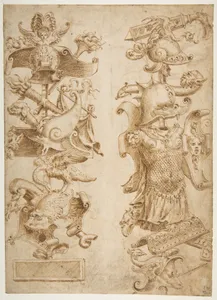
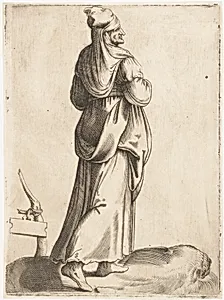
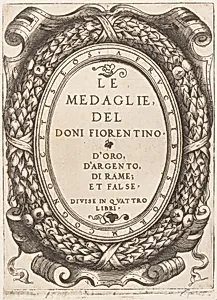
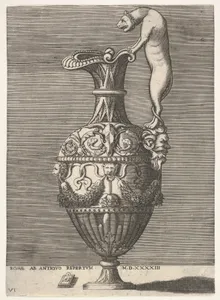
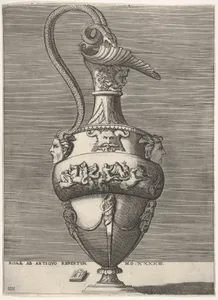
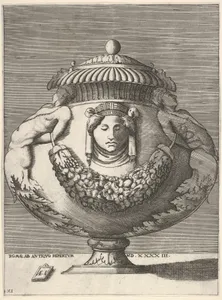
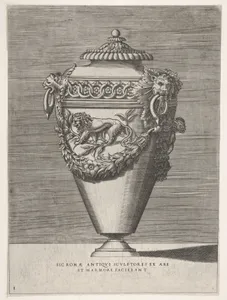
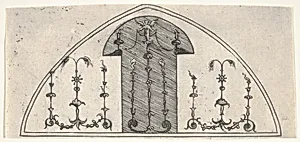
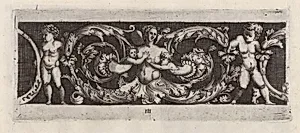
Vico quickly established himself as a virtuoso craftsman with a particular gift for the ornamental and the antiquarian. He collaborated with Barlacchi on a series of grotesque decorations in imitation of ancient Roman paintings, and he produced reproductive engravings after works by Michelangelo and other leading artists of the day. His sojourn in Florence, where he made prints for Grand Duke Cosimo I de' Medici, further refined his technical command and expanded his access to major commissions. In 1546 he settled in Venice, where he spent nearly two decades and became deeply involved with the study of ancient coinage and imperial portraiture—producing scholarly series of engraved Roman imperial medals and numismatic subjects that combined artistic finesse with erudite historical research.
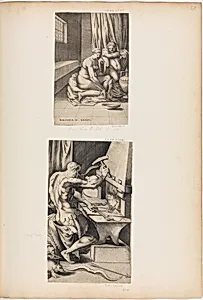
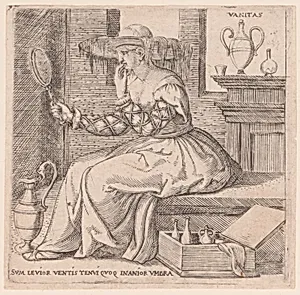
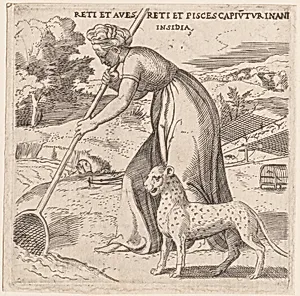
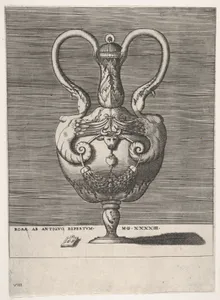
Among Vico's most celebrated works are his series of engravings depicting Roman emperors and empresses, which were valued as both visual documents and scholarly references throughout the sixteenth century. He also produced mythological compositions, ornamental prints, and reproductions after Raphael and his circle, demonstrating remarkable range. In 1563 he left Venice at the invitation of Alfonso II d'Este, Duke of Ferrara, and remained at the Este court until his death in 1567.
Vico's legacy rests on his role as a bridge between the first great age of Italian reproductive engraving and a more learned, antiquarian approach to the medium. His prints circulated widely and served as important conduits for the dissemination of Renaissance imagery across Europe, influencing subsequent generations of printmakers who looked to Rome for models of craft and classical erudition.