Ctrl K
1555–1636
Occupations
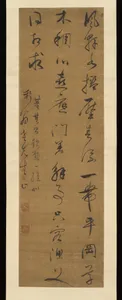
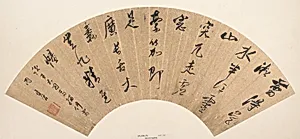
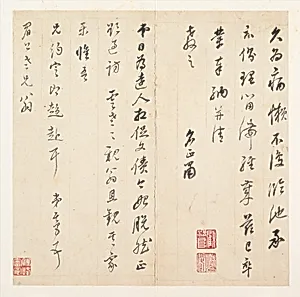
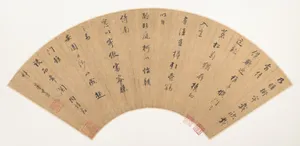
Dong Qichang (1555–1636), born in Huating in present-day Shanghai's Songjiang region, emerged from a scholarly yet impoverished family as the son of a local school teacher. A precocious child, he passed the prefectural civil service examination at age twelve, securing entry to a government school, and later sat for the imperial exams, placing second at seventeen to his cousin due to inferior calligraphy—a slight that spurred rigorous self-training in the art form from age sixteen. He began painting around age twenty-two, drawing stylistic inspiration from calligraphers like Wen Zhengming and Zhao Mengfu, as well as Tang and Jin dynasty masters, while his landscapes echoed the "soft southern" manner of Dong Yuan and Juran alongside the Four Masters of the Yuan dynasty: Huang Gongwang, Wu Zhen, Ni Zan, and Wang Meng.
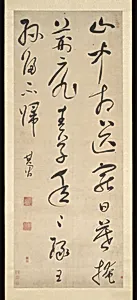
Succeeding in the jinshi examination at thirty-five, Dong entered Ming officialdom, rising to positions in the Ministry of Rites amid scandals, including exam protests and mob violence against his home, before retiring to focus on art. As a leading theorist, he formalized the Southern School tradition—prioritizing intuitive, Chan-inspired brushwork from literati amateurs over the Northern School's meticulous, professional lines—elevating expressive "clumsiness," distorted spatial depth, and calligraphic force to capture inner spirit rather than superficial beauty. Friend Mo Shilong helped conceive this dichotomy, which Dong championed in writings like *Huayen* ("The Eye of Painting") and *Huazhi* ("The Meaning of Painting"), transforming literati aesthetics.
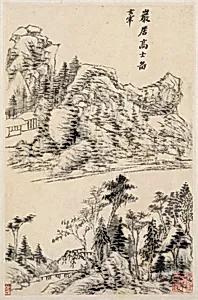
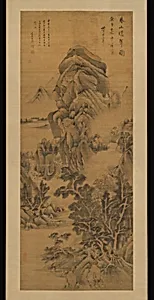
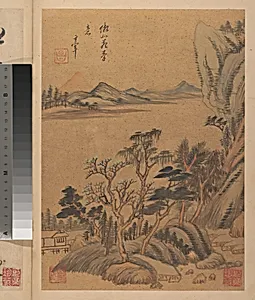
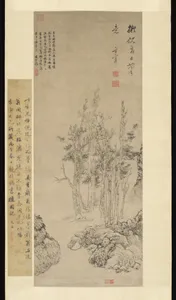
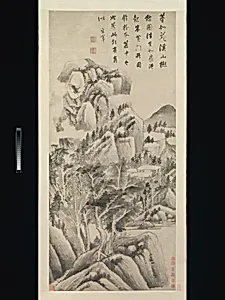
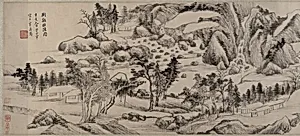
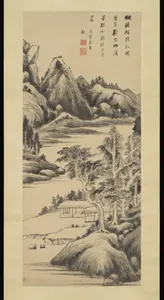
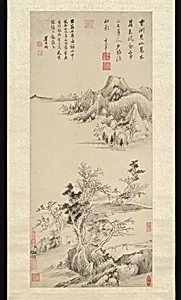
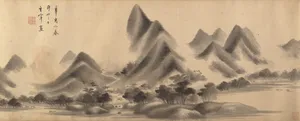
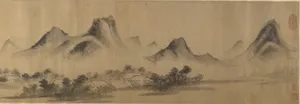
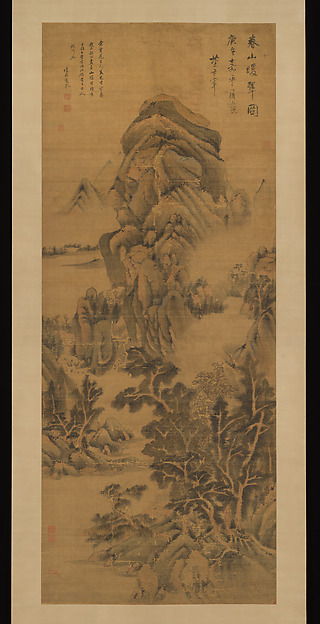
His oeuvre includes masterpieces like *Wanluan Thatched Hall* (1597), *The Qingbian Mountains in the Manner of Dong Yuan* (1617), *Eight Views of Autumn Moods* (1620), *Landscapes in the Manner of Old Masters* (1621–24), and the 1630 album *Landscapes after Old Masters*, which contrasted "hemp-fiber" and "folded-ribbon" strokes to homage Song-Yuan styles. Other gems encompass *Seeking Ancient in Fengjing*, *White Clouds at the Xiao and Xiang Rivers*, and *Tree in Summer with the Shadow*.
Dong's legacy endures as the late Ming's preeminent tastemaker; with the "Nine Friends," he arbitrated artistic value, influencing Qing collectors and painters in regions like Songjiang and Yangzhou, while his theories shaped Chinese art historiography for centuries.
Wikidata (CC0); Getty ULAN (ODC-By)
All 20 artworks loaded