
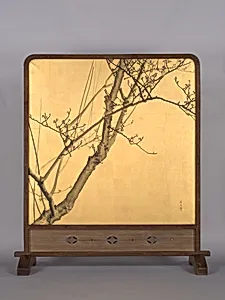
松村景文筆 頼山陽書 梅図衝立屏風|Plum Blossoms
Medium
Freestanding screen (tsuitate); ink on paper
Dimensions
H. (incl. stand) 57 in. (144.8 cm)
Classification
Paintings
Culture & Period
Japan · Edo period (1615–1868)
Department
Asian Art
Museum
Metropolitan Museum of Art, New York, NY
Credit
Gift of Florence and Herbert Irving, 2015
Accession Number
2015.500.9.57a–c
Rights
Public Domain
Art Historical Context
This elegant freestanding screen, known as a tsuitate, was created around 1823 during Japan’s Edo period by painter Matsumura Keibun and calligrapher Rai San’yō. Rendered in ink on paper, the work features delicate plum blossoms accompanied by poetic inscriptions, reflecting the refined tastes of the era. At just under five feet tall including its stand, the screen was designed as a portable room divider, offering both practical function and quiet beauty within a traditional Japanese interior. The collaboration between Keibun and Rai San’yō highlights the close relationship between painting and calligraphy in Edo-period art. Keibun’s fluid brushwork captures the graceful forms of the blossoms, while Rai’s elegant script adds a literary dimension, inviting viewers to appreciate the interplay of image and text. Such tsuitate screens were valued not only for their decorative appeal but also for their ability to subtly shape space and atmosphere in homes or studios. Now part of the Metropolitan Museum’s collection through the generosity of Florence and Herbert Irving, this piece offers a glimpse into the cultural sophistication of nineteenth-century Japan. Its compact scale and monochromatic palette emphasize restraint and elegance, qualities that continue to resonate with visitors today.
About the Artist
Matsumura Keibun 松村景文|Rai San’yō 頼山陽 (Japanese) · 1779 –1843
Japanese, 1779–1843