
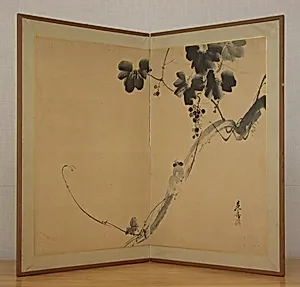
Squirrel on Grapevine
19th century
Medium
Two-panel folding screen; ink on paper
Dimensions
41 1/2 in. × 55 in. (105.4 × 139.7 cm)
Classification
Paintings
Culture
Japan
Department
Asian Art
Museum
Metropolitan Museum of Art, New York, NY
Credit
Gift of Harold G. Henderson, 1966
Accession Number
66.155.1
Rights
Public Domain
Tags
Art Historical Context
Behold *Squirrel on Grapev*, a captivating two-panel folding screen byata Zeshin (1807–1891), a master of 19th-century Japanese art Created during Japan's late Edo to early Meiji periods, ink-on-paper work measures an impressive 41½ × 55 inches, perfectly suited for adorning a traditional room as a byōbu screen. Zeshin's playful depiction of a fluffy squirrel scampering amid lush grapevines, heavy with fruit and foliage, captures nature's whimsical vitality with exquisite detail. Zeshin, renowned for bridging classical Japanese techniques with innovative realism, elevated urushi-e (lacquer painting) but shone equally in ink. Here, his masterful brushwork renders the squirrel's fur with lifelike texture and the grapes' translucency through subtle gradations of sumi ink—techniques that mimic lacquer's glossy depth on mere paper. Folding screens like this were prized in elite homes, symbolizing abundance (grapes for fertility) and seasonal harmony, reflecting Zen-inspired appreciation for the everyday. A gift to the Metropolitan Museum of Art from Harold G. Henderson in 1966, this piece exemplifies Zeshin's enduring legacy in Asian Art, inviting viewers to ponder the delicate balance of mischief and bounty in Japan's natural world.
About the Artist
Shibata Zeshin · 1807–1891
Japanese, 1807–1891