Ctrl K
1882–1916
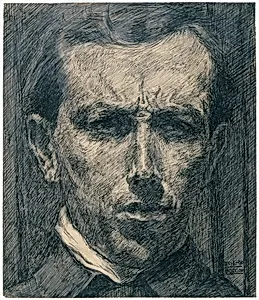
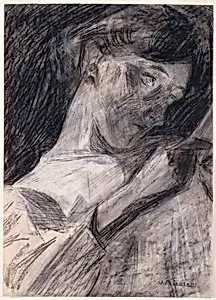
Umberto Boccioni (1882–1916) was an Italian painter and sculptor who became the leading artist and principal theorist of the Futurist movement. Born in Reggio Calabria, he studied in Rome under the Divisionist painter Giacomo Balla and was deeply influenced by Post-Impressionism before encountering the ideas of Filippo Tommaso Marinetti, whose 1909 Futurist Manifesto catalyzed Boccioni's artistic vision.
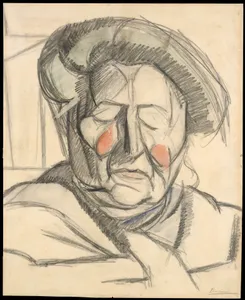
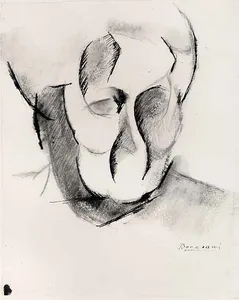
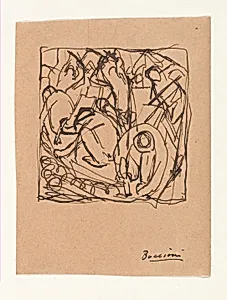
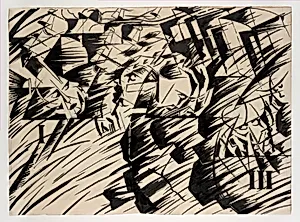
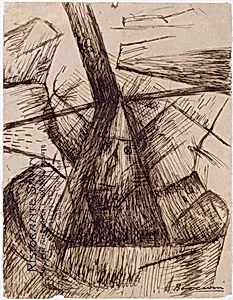
Boccioni became the intellectual engine of Futurist visual art, co-authoring the "Technical Manifesto of Futurist Painting" (1910) and the "Technical Manifesto of Futurist Sculpture" (1912). His paintings sought to capture motion, energy, and the dynamism of modern urban life through interpenetrating planes of color, fragmented forms, and lines of force. Works such as "The City Rises" (1910), "States of Mind" triptych (1911), and "Elasticity" (1912) are landmarks of early twentieth-century modernism.
Boccioni's greatest single work may be the sculpture "Unique Forms of Continuity in Space" (1913), a striding bronze figure whose aerodynamic, flame-like forms embody the Futurist ideal of speed and dynamism. It is widely considered one of the masterpieces of modern sculpture and now appears on the Italian twenty-cent euro coin.
Boccioni volunteered for military service in World War I and was killed in a cavalry training accident near Verona at age thirty-three. Despite his brief career, his theoretical writings and artistic innovations had a lasting impact on the development of abstract art, Constructivism, and kinetic sculpture. His work is held by the Museum of Modern Art, the Metropolitan Museum of Art, the Pinacoteca di Brera in Milan, and the Galleria Nazionale d'Arte Moderna in Rome.