
Lakdoos met deksel
ca. 1500 - ca. 1700
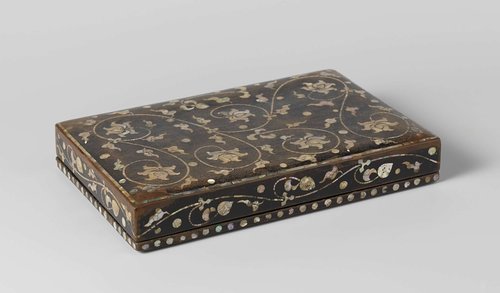
Medium
wood, lacquer, mother-of-pearl
Dimensions
27; 4.3; 18
Rights
Public Domain
About this artwork
height 18 cm x width 27 cm x depth 4.3 cm
Art Historical Context
Step into the world of exquisite craftsmanship with *Lakdoos met deksel* (Lacquer Box with Lid), anonymous treasure from around 1500–1700. Crafted from wood coated in lustrous lacquer and adorned with shimmering mother-of-pearl inlays, this compact box measures just 18 cm high, 27 cm wide, and4.3 cm deep—perfectly sized for holding precious items like cosmetics, spices, or jewelry. Its rectangular form with a fitted lid exemplifies the delicate balance of utility and opulence. Lacquerware like this flourished through global trade routes, particularly those linking Asia to Europe. The Dutch, via the VOC (Dutch East India Company), imported such luxuries from Japan and China, where artisans mastered the labor-intensive process of applying multiple layers of tree sap resin, polishing it to a mirror-like sheen, and embedding iridescent mother-of-pearl for intricate designs. This technique not only ensured durability but also created a hypnotic depth of color and light. In a European context, this box symbolized exotic wealth and cultural exchange during the Renaissance and early modern era. Though anonymous, it whispers of skilled hands bridging continents, inviting us to ponder the untold stories of merchants and makers who connected distant worlds through beauty.
About the Artist
anonymous
In the vast tapestry of art history, "Anonymous" stands not as a singular individual but as a collective designation for countless unidentified creators whose works have endured across millennia. These artists, spanning prehistoric cave painters to medieval illuminators and folk craftsmen, produced the foundational layers of human visual culture. Prior to the Renaissance, when individual fame emer...