Ctrl K
1813–1894
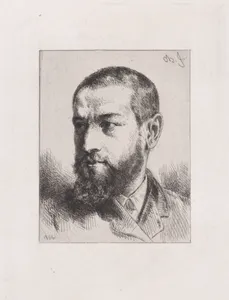
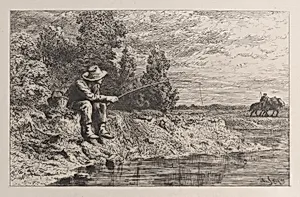
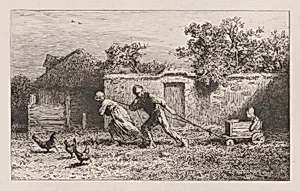
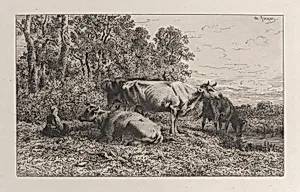
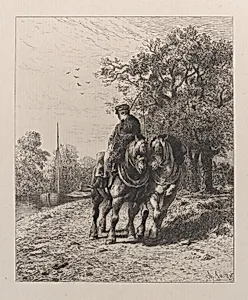
Charles-Émile Jacque (1813–1894) was a pioneering French painter, engraver, and illustrator whose career bridged the worlds of printmaking and pastoral painting. Born in Paris amid a difficult childhood, he apprenticed at age seventeen to a map engraver, mastering drypoint technique and producing his first etching in 1830—a copy of a head after Rembrandt. After serving seven years in the French Army, where he honed his drawing skills, Jacque worked as a caricaturist and illustrator in Paris and London. In 1849, fleeing a cholera epidemic, he relocated to the village of Barbizon with his family and close friend Jean-François Millet, settling next door and immersing himself in the surrounding Fontainebleau forest.
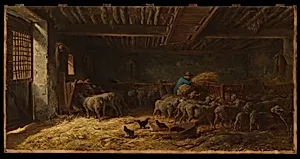
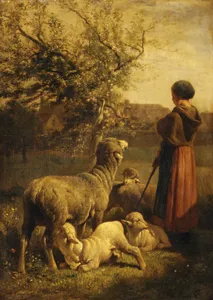
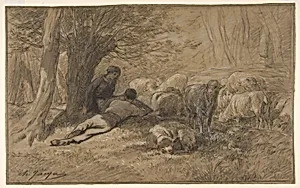
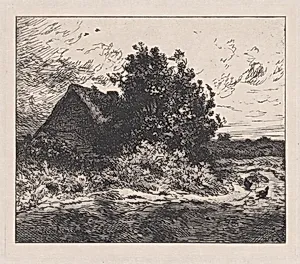
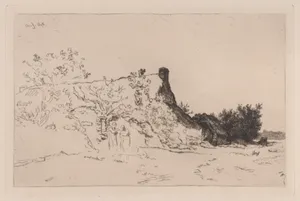
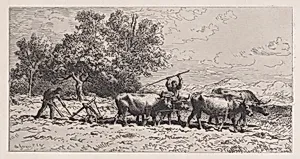
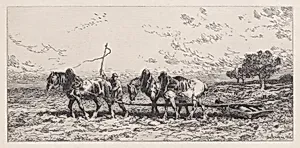
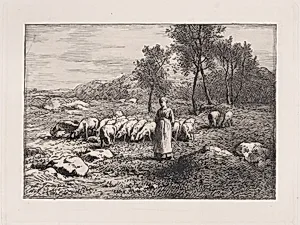
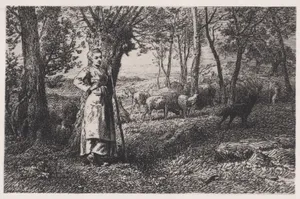
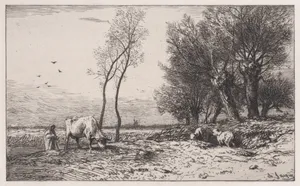
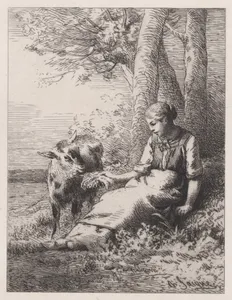
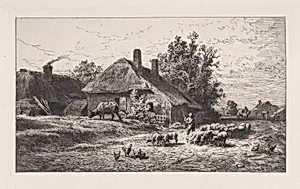
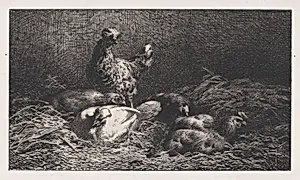
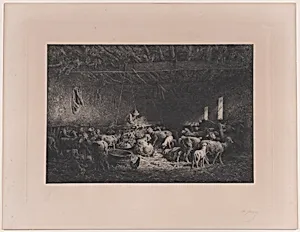
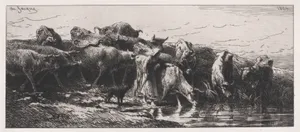
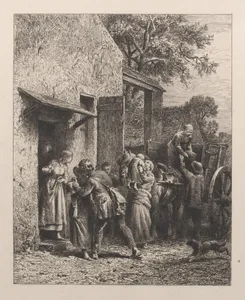
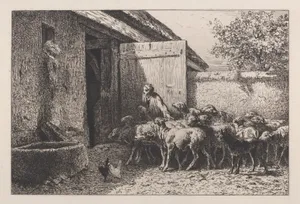
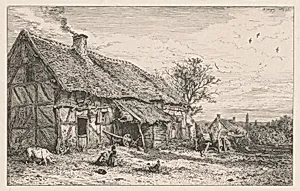
A foundational member of the Barbizon School, Jacque specialized in rustic pastoral scenes featuring farm animals—especially sheep, pigs, and poultry—peasants at labor, and bucolic interiors, drawing inspiration from Dutch masters like Adriaen van Ostade and Rembrandt. His style evolved from an initial elegance to robust realism, emphasizing linear precision in etchings that revived seventeenth-century techniques alongside Félix Bracquemond. He produced over 500 prints, including *Le Troupeau de cochons* (1845–46), *Les Boeufs à l’abreuvoir* (1846–48, Musée des Beaux-Arts, Angers), *Poultry* (c. 1855–60), and *Le Printemps* (1859), alongside paintings like *Interior* (1852) and his final Salon entry, *Intérieur d’Écurie* (1894). Jacque illustrated classics such as Shakespeare's works and Oliver Goldsmith's *Vicar of Wakefield*, and even authored *Le Poulailler* (1858), a treatise on poultry breeding that reflected his deep knowledge of rural life.
Jacque's sons—Émile (1848–1912), Frédéric (1859–1931), and Lucien—followed artistic paths, though Lucien was tragically executed as a Communard during the Paris Commune's repression. Achieving commercial success with rapid sales that spawned forgeries by 1895, Jacque preceded Millet in depicting peasants and animals, influencing his neighbor's shift toward realism, as noted by contemporaries like Jules Claretie. His legacy endures in the Barbizon emphasis on en plein air observation and the elevated status of animalier painting, blending journalistic detail with poetic evocation of France's agrarian soul. With 133 works in prominent collections, Jacque remains a vital, if sometimes overshadowed, voice of nineteenth-century Realism.