
Arts of Asia — Page 25
9,604 artworks · Art Institute of Chicago
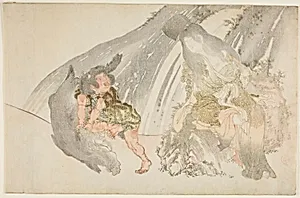
Yamauba Watching Kintaro Wrestle a Boar
Kubo Shunman, late 18th/early 19th century
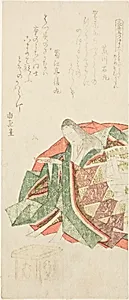
The Proper Way of Drinking New Year's Sake (Toso no miki namesomuru tei), from the series "Teaching Manners According to the Colors of the Spring (Shunshoku shitsukekata)"
Kubo Shunman, c. 1807
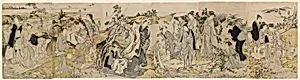
The Noda Jewel River, from a hexaptych depicting the Six Jewel Rivers
Kubo Shunman, c. 1781/89
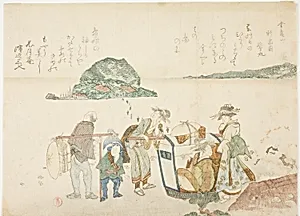
Visitors to Enoshima, from the album "Mountains of the Four Quarters (Yomo no yama)"
Kubo Shunman, early 19th century
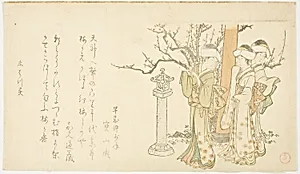
Three Girls at Temple Gate
Kubo Shunman, possibly 1799
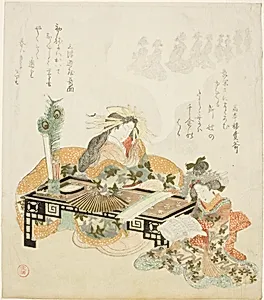
Courtesan Dreaming of Procession
Kubo Shunman, 1814
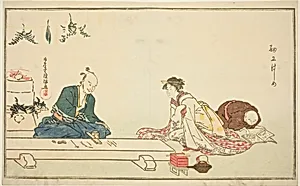
The First Work in the New Year (Saiko hajime)
Kubo Shunman, c. 1790s
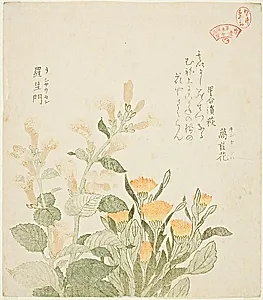
The Common Marigold and The Rajoman Flowers
Kubo Shunman, early 19th century
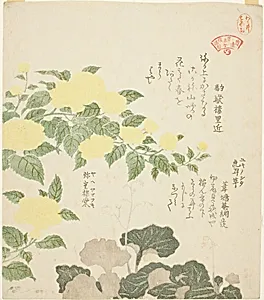
Yellow Roses (Yae yamabuki) and Creeping Saxifrages (Yukinoshita), from the series "Collection of Plants for the Kasumi Poetry Circle (Kasumi-ren somoku awase)"
Kubo Shunman, 1810s
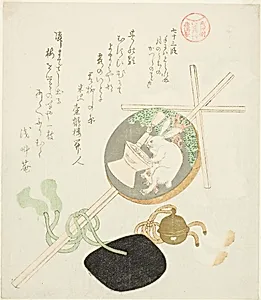
Episode 73 (Nanajusan dan), from the series "Tales of Ise for the Asakusa Group (Asakusagawa Ise Monogatari)"
Kubo Shunman, c. 1812
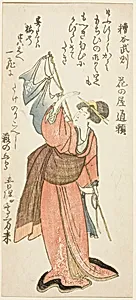
Kasuya Takenori, from the series "Parody of the Seven Spear-bearing Samurai of Yanagase (Ito no Yanagase shichihon yari ume)"
Kubo Shunman, c. 1803/04
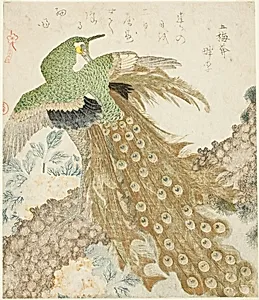
Peacock, Pine Tree, and Peonies, from the series "A Set of Three Petals (San hira no uchi)"
Kubo Shunman, 1810s
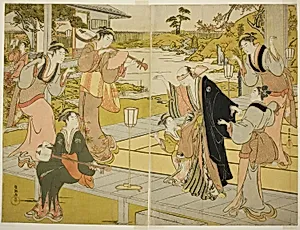
Oboshi Yuranosuke at the Ichiriki Teahouse, from scene VII in the Storehouse of Loyal Retainers
Kubo Shunman, c. 1785/89
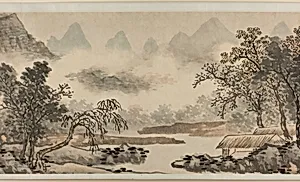
Clouds over the River before Rain 溪雲欲雨圖
Shen Zhou, Ming dynasty (1368–1644), dated 1504
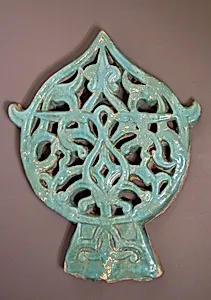
Ceramic Architectural Decoration
Islamic, 13th century
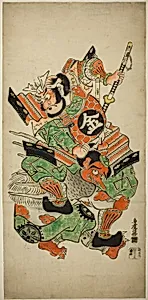
Sakata Kintoki Wrestling with a Tengu
Torii Kiyomasu I, 1715-18
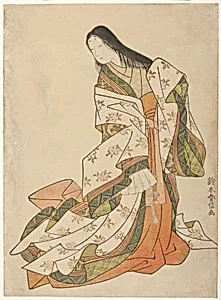
The Poetess Ono no Komachi
Suzuki Harunobu, Edo period (1615–1868), 1767/68
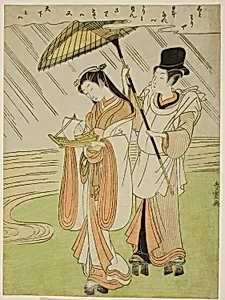
Praying for Rain Komachi (Amagoi Komachi)
Shiba Kokan, Edo period (1615–1868), 1770
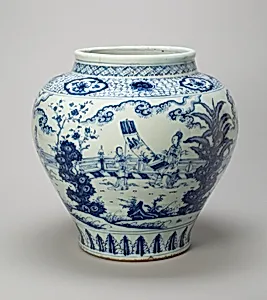
Jar with the Four Accomplishments: Painting, Calligraphy, Music, Strategy
Unknown, Ming dynasty (1368–1644), 15th century
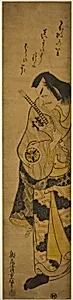
The Actor Matsumoto Koshiro II as Fuwa Banzaemon in the play "Monzukushi Nagoya Soga," performed at the Ichimura Theater in the first month, 1748
Torii Kiyoshige, 1748
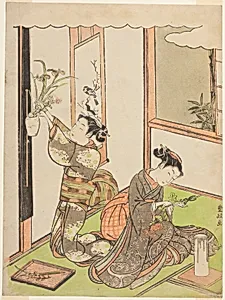
Flower Arranging
Kitao Shigemasa, c. 1769
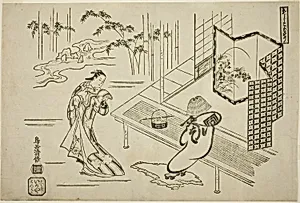
Two Actors in a Drama
Torii Kiyomasu I, About 1715
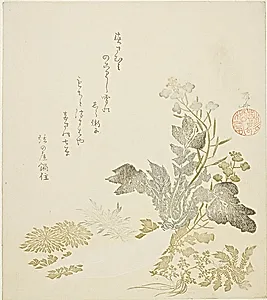
A Giant Radish, Chrysanthemums, and Ferns
Ryuryukyo Shinsai, About 1820
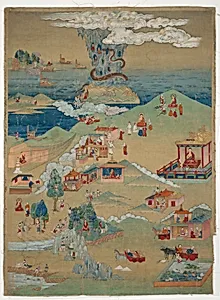
Painted Banner (Thangka) of Five Morality Tales from the Avadana Kalpalata Jataka
Unknown, late 18th century
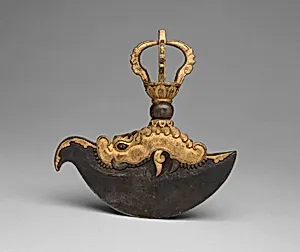
Ritual Flaying Knife (Kartrika)
Unknown, 17th/18th century
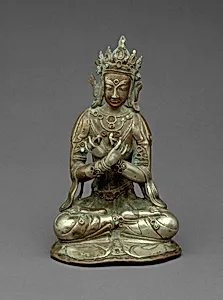
Vajradhara Buddha Seated Holding a Thunderbolt (Vajra) and Bell (Ghanta)
Unknown, 15th century
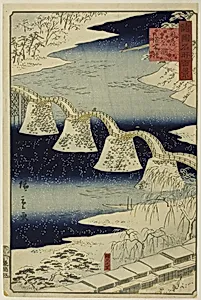
Kintai Bridge at Iwakuni, Suo (Boshu) Province from the series “One Hundred Famous Views of the Various Provinces”
Utagawa Hiroshige II (Shigenobu), 1859
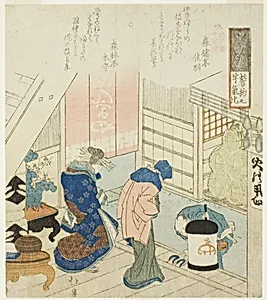
Promise (Seiyaku no ukei), from the series "Eighteen Illustrations of the Ladder of Ancient Words (Kogentei juhachiban tsuzuki)"
Totoya Hokkei, 1831
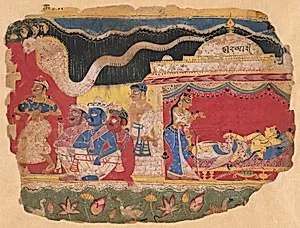
The Infant Krishna Spirited Away by Vasudev, from a copy of the Dispersed Bhagavat Purana
Unknown, c. 1520–1530
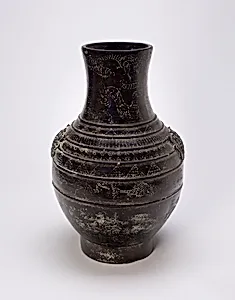
Container in the Form of a Bronze Jar (Hu)
Unknown, Warring States period, 475–221 BCE
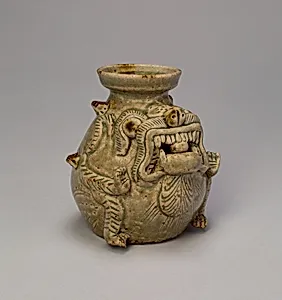
Vessel in the Form of a Fantastical Frog
Unknown, Western Jin dynasty (265–316 AD)
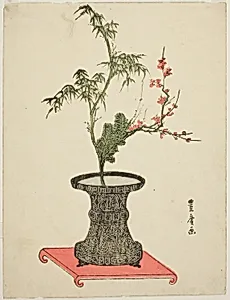
Three friends Ikebana
Utagawa Toyohiro, Late 18th-early 19th century
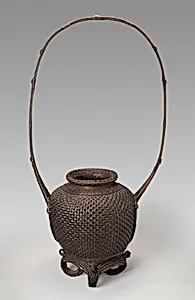
Peony Basket
Unknown, 19th century
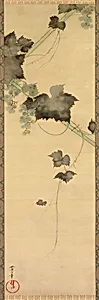
Grapevines
Sakai Oho, n.d.
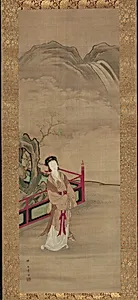
Yang Guifei
Katsukawa Shunsho, 1789-92
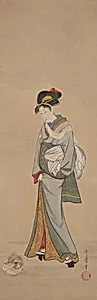
Woman with Puppies
Kitagawa Utamaro, 1801/4
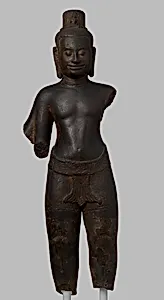
Bodhisattva Avalokiteshvara
Khmer, Angkor period, late 12th–early 13th century
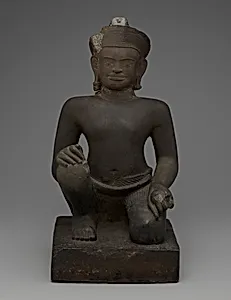
Kneeling Hunchback
Khmer, Angkor period, 11th century
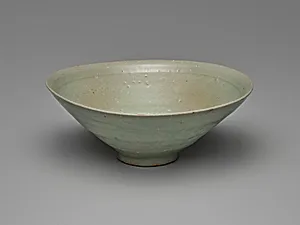
Bowl
Unknown, Joseon dynasty (1392–1910), 12th century
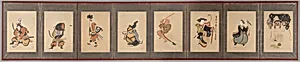
Otsu-e paintings
Unknown, c.1850
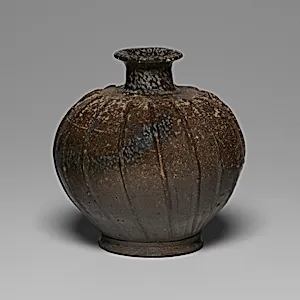
Jar with Vertical Ribs
Unknown, Unified Silla (676–935)
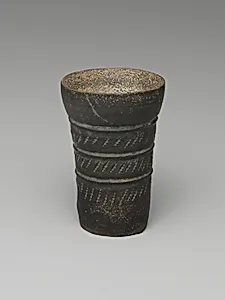
Tall Cup with Diagonal Slashes
Unknown, Three Kingdoms period (57 B.C.–A.D. 668), Gaya Federation (42–562)
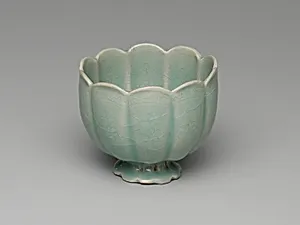
Lobed Cup
Unknown, Goryeo dynasty (918–1392), mid–12th century
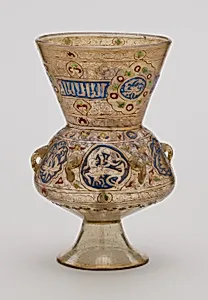
Lamp
Islamic, Mamluk dynasty (1250-1517), 14th century
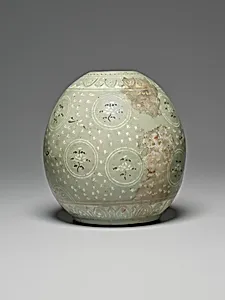
Globular Vase
Unknown, Late 12th to 13th century
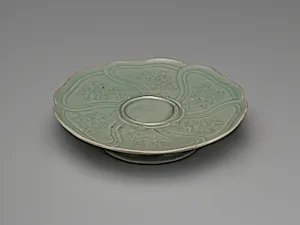
Cup Stand with Overlapping Petals and Floral Sprays
Unknown, Goryeo dynasty (918–1392), mid–12th century
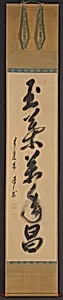
Triptych of Calligraphy
Katsuzan Dowa, Late 17th– early 18th century
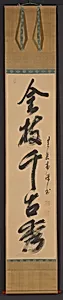
Triptych of Calligraphy
Katsuzan Dowa, Late 17th– early 18th century